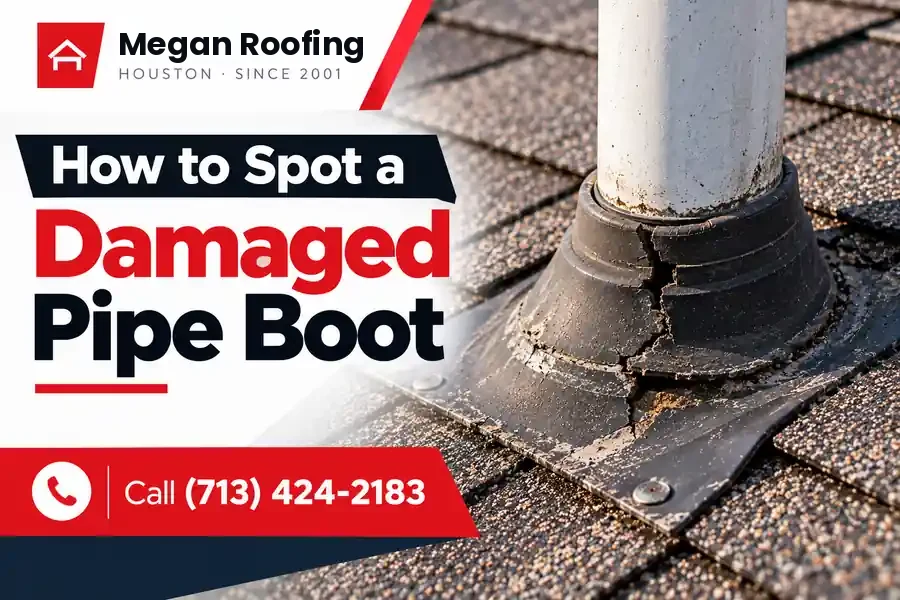
A small crack around a roof vent pipe might not look like a serious problem, but it can create an easy path for rainwater to enter your home. Pipe boots seal the openings where plumbing vent pipes pass through the roof. When these components deteriorate, water can reach the roof decking, attic insulation, and interior ceilings.
For homeowners in Houston, TX, changing weather, strong sunlight, heavy rainfall, and humidity can put roofing materials under stress. Knowing how to spot a damaged pipe boot can help you identify warning signs early and arrange repairs before the damage spreads.
What Is a Roof Pipe Boot?
A roof pipe boot is a flashing component installed around a plumbing vent pipe that extends through the roof. It creates a weather-resistant seal between the pipe and the surrounding roofing materials.
Pipe boots commonly feature a base flange and a collar that fits around the pipe. Depending on the roofing system, they may be made from rubber, metal, plastic, or a combination of materials.
The boot helps prevent rainwater from entering the opening around the pipe. However, exposure to weather, poor installation, and material deterioration can eventually compromise the seal.
7 Common Signs of a Damaged Pipe Boot
1. Cracks in the Rubber Collar
One of the clearest signs of a failing pipe boot is cracking around the rubber collar. Over time, rubber can become brittle, shrink, or split because of prolonged sunlight exposure and changing temperatures.
Even a small crack can allow water to pass between the pipe and the collar.
Look for:
- Visible cracks or splits in the rubber.
- Brittle or deteriorating material.
- Missing sections around the pipe.
- A collar that no longer fits tightly.
What to do next: Arrange an inspection to determine whether the boot needs replacement or another repair.
2. Gaps Around the Vent Pipe
The collar should fit snugly around the plumbing vent pipe. If it shrinks, loosens, or becomes misshapen, a gap may develop between the pipe and the boot.
Rainwater can enter through this opening, particularly during heavy or wind-driven rainfall.
Look for:
- A visible gap between the pipe and its seal.
- A loose or uneven collar.
- Rubber that has pulled away from the pipe.
What to do next: Have the seal checked by a roofing professional rather than relying on surface sealant alone.
3. Damaged or Lifted Flashing
The base flange helps direct water over the surrounding roofing materials. If it cracks, lifts, or separates from the roof, water may get underneath it.
Shingles around the vent pipe can also become damaged or displaced, compromising the flashing detail.
Look for:
- Lifted or curled flange edges.
- Cracked plastic or corroded metal.
- Loose or missing surrounding shingles.
- Visible gaps around the flashing base.
What to do next: Ask a roofer to inspect the complete pipe penetration, including the flange and nearby shingles.
4. Loose or Missing Fasteners
Some pipe boots use nails or other fasteners to secure the flashing flange. Loose, exposed, or incorrectly positioned fasteners can create potential water-entry points.
Look for:
- Raised or missing nails.
- Loose flashing around the base.
- Gaps near fastener locations.
What to do next: Have the fasteners and surrounding flashing assessed to establish whether the problem requires resecuring, replacement, or additional repairs.
5. Water Stains on Interior Ceilings
A damaged pipe boot can allow rainwater into the attic, where it may travel along roof decking or framing before reaching the ceiling. You might notice brown or yellow stains, peeling paint, or damp patches.
Look for:
- Brown or yellow ceiling marks.
- Peeling or bubbling paint.
- Stains that become darker after rainfall.
- Moisture near an upstairs bathroom or plumbing vent.
What to do next: Photograph the affected area and note when the staining appears. Remember that ceiling stains can also result from plumbing leaks or other roofing problems.
6. Damp Insulation or Roof Decking
Moisture around a plumbing vent can affect attic insulation and the underside of the roof decking. Persistent dampness may contribute to unpleasant odors, mold growth, or wood deterioration.
Look for:
- Wet or compressed insulation.
- Dark water trails on roof decking.
- Damp or discolored wood.
- Musty odors around the affected area.
What to do next: Arrange an inspection to identify the moisture source and assess any materials that may need drying or replacement.
7. A Leak That Returns After Rain
If a ceiling stain repeatedly becomes darker after storms, the underlying water-entry point may still be present. A previous repair may have addressed visible damage without correcting the failed seal.
However, recurring leaks do not automatically mean the pipe boot is responsible. Damaged shingles, roof valleys, and other flashing details can cause similar symptoms.
Look for:
- Stains that return after rainfall.
- Moisture appearing in the same area repeatedly.
- Water marks that worsen during heavy or wind-driven rain.
What to do next: Keep a record of when the leak occurs and share the details with a roofing professional.
Damaged Pipe Boot: Signs and Possible Causes
| Warning sign | Possible cause | Recommended next step |
|---|---|---|
| Cracked rubber collar | Aging or weather exposure | Inspect the collar and consider replacement |
| Gap around the pipe | Shrinkage or poor fit | Have the seal assessed |
| Lifted flashing flange | Deterioration or installation problems | Inspect the flange and surrounding shingles |
| Loose fasteners | Fastener movement or improper installation | Check the flashing attachment |
| Ceiling water stains | Moisture entering the roof system | Trace the source before repairing interior finishes |
| Wet attic insulation | Ongoing moisture intrusion | Identify the leak and assess affected insulation |
| Recurring leak after rain | Unresolved leak or another roof defect | Arrange a thorough roof inspection |
These signs can indicate a pipe boot problem, but an inspection is needed to confirm the actual cause.
How to Check a Pipe Boot Safely
You do not need to climb onto your roof to begin looking for signs of damage. Follow these steps to assess the situation safely.
- Inspect from the ground. Use binoculars or a phone camera with zoom to look for cracked rubber, damaged flashing, or displaced shingles.
- Check the interior. Look for ceiling stains, peeling paint, musty odors, and damp areas that appear after rain.
- Examine the attic only if safe. If access and flooring are safe, look for water trails or damp materials near the plumbing vent.
- Take photographs. Document visible damage and note when moisture appears.
- Arrange a professional inspection. Share your observations so the roofer can investigate the likely source.
Safety note: Never climb onto a wet, steep, or storm-damaged roof. Keep away from wet electrical fixtures and visibly sagging ceilings.
Can a Damaged Pipe Boot Be Repaired?
The appropriate repair depends on the type and extent of the damage.
A roofing professional may recommend:
- Pipe boot replacement: When the rubber collar is cracked, brittle, or no longer seals properly.
- Flashing repair: When the base or its connection to the roof has been compromised.
- Shingle repair: When nearby shingles are damaged or incorrectly positioned.
- Additional moisture repairs: When water has affected the roof decking, insulation, or interior finishes.
Applying caulk over a deteriorated collar may provide only a temporary result. The repair should address the failed component and maintain the proper water-shedding arrangement of the roofing system.
When Should You Call a Roofing Professional?
Arrange an inspection if you notice a cracked pipe boot, gaps around a vent pipe, damaged flashing, or recurring water stains after rainfall. Prompt attention can help limit additional damage to insulation, drywall, and wooden roof components.
Seek urgent assistance if water is actively entering the home, a ceiling is sagging, or moisture is near electrical equipment. Keep people away from affected areas until the hazards have been addressed.
Get Help With Pipe Boot Leaks in Houston, TX
A damaged pipe boot may be a small roofing issue, but leaving it unresolved can lead to more extensive water damage. Identifying the warning signs and arranging the right repair can help protect your home’s roofing system.
Megan Roofing ((713) 424-2183) provides roof leak assessment and repair services in Houston, TX. If you suspect a leak around a plumbing vent, request an estimate to discuss the condition of your roof and the appropriate next steps.